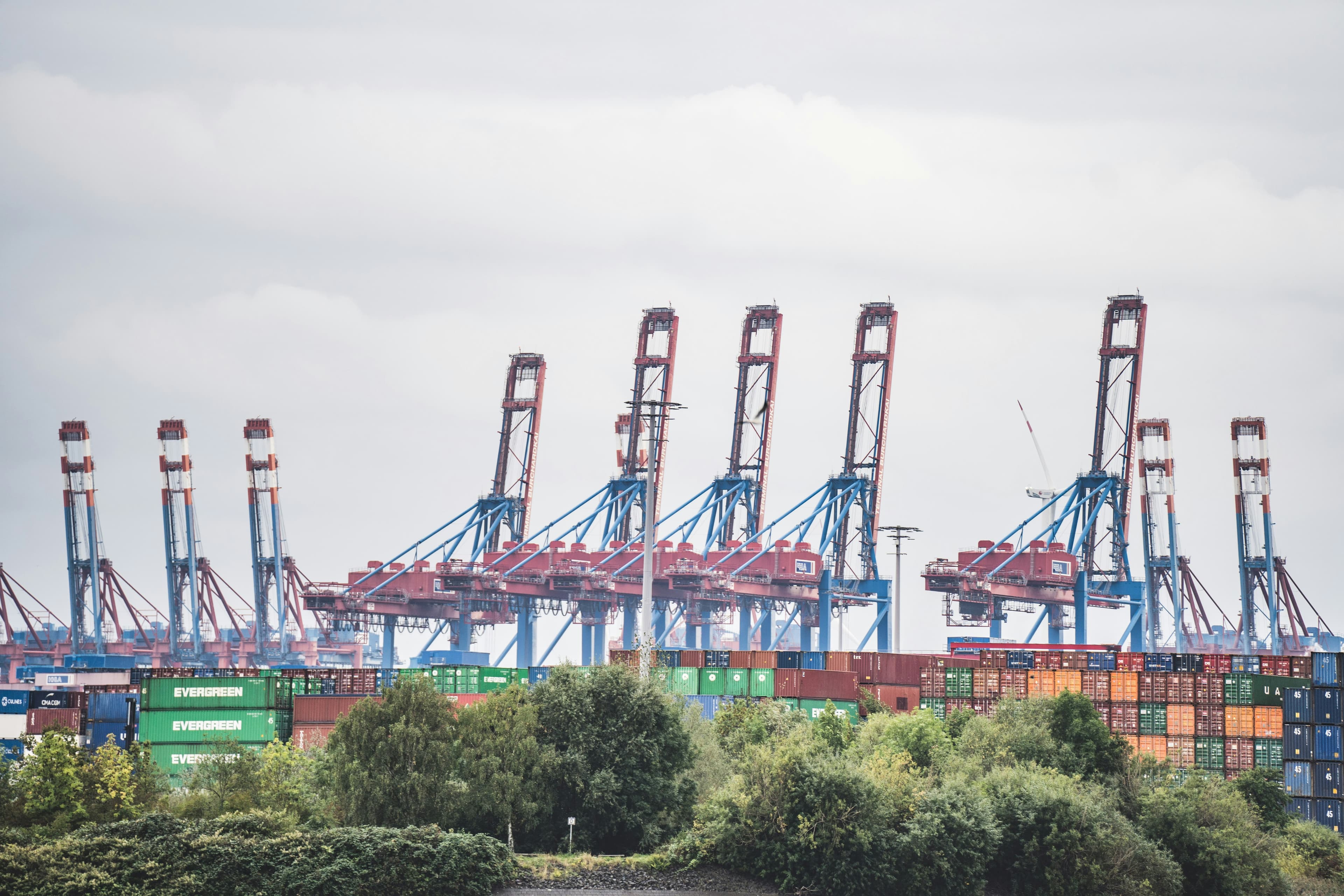
Hamburg · Germany
Deal Origination in Hamburg
Hamburg's diversified Mittelstand, Europe's third-largest port and an established PE scene make the city one of Germany's most attractive M&A locations. I am based in Hamburg myself and know the local market.
Hamburg as an M&A location: market overview
With around 100,000 small and medium-sized companies, the Free and Hanseatic City of Hamburg is one of the densest SME clusters in Germany. The metropolitan region generates a GDP of more than €130 billion, which puts it among the five strongest economic regions in the country. For private equity funds and strategic buyers, Hamburg offers a rare combination: international infrastructure, diversification across sectors and an owner-managed Mittelstand that increasingly faces the succession question.
The Hamburg M&A market has a high share of off-market transactions. Estimates suggest that 60-70% of all Mittelstand deals in the region close without a public bidding process. Access to these transactions needs local networks, sector expertise and, above all, trust. This is where systematic deal origination comes in.
dealorigination.de and SourcingClub are based in Hamburg. Local market knowledge, personal networks and a deep understanding of Hamburg's sector structure are the basis of my deal origination method.
Six sectors with high deal activity
Hamburg's economy is broadly diversified. Six sectors drive M&A activity, each with its own drivers.
Logistics & Supply Chain
Hamburg's port handles more than 120 million tonnes a year and is the backbone of an ecosystem of freight forwarders, warehouse operators and 3PL providers. The ongoing digitalisation of the supply chain and growing ESG requirements are driving consolidation, especially among mid-sized freight forwarders with €10–50m revenue.
Maritime Services & Offshore
Shipping, offshore wind technology and port logistics form one of the strongest maritime clusters in Europe. The shift towards LNG and green fuels opens up acquisition opportunities.
Life Sciences & Medtech
More than 500 life sciences companies, UKE and DESY. PE funds focus on laboratory service providers and digital health solutions with high recurring revenue.
Media & Digital
Germany's media capital, with leading publishers and digital agencies. The convergence of content, tech and e-commerce keeps producing new acquisition targets.
Renewable Energy
Europe's wind power hub. The expansion of offshore wind creates demand for specialised engineering, maintenance and planning companies.
Food & Beverage
From the fish market to industrial production: plant-based, D2C and sustainable supply chains are driving buy-and-build among mid-sized manufacturers.
All 20 sectors → EBITDA Multiples DACH 2026
Data basis: DUB KMU-Multiples (aggregated market estimates from M&A advisory firms in the DACH region), as of Q3/2026. Preparation and smoothing: SourcingClub. Range per sector across all size classes.
Three hurdles for deal origination in Hamburg
The Hamburg Mittelstand is attractive, but not easy to access. Anyone who wants to build proprietary deal flow has to solve three structural challenges.
01: Owner-managed structures
More than 85% of Hamburg SMEs are owner-managed. Company sales are rarely communicated publicly. Discretion comes first. Without personal access to the shareholders, most targets stay invisible.
02: Fragmented advisory market
Hamburg has more than 30 active M&A advisers and corporate finance boutiques. Without systematic network management, investors miss relevant mandates, especially in the segment below €20m enterprise value, where broker processes are rare.
03: Sector-specific expertise
The maritime industry, port logistics and wind energy need deep sector knowledge. Generic search profiles deliver hardly any qualified targets in these niches. Successful deal origination needs a sector-specific way of approaching owners.
“In the Hamburg Mittelstand, the best transactions do not come from platforms. They come from personal conversations, trust built over years and local sector knowledge.”
My method in five phases
Local networks combined with a data-driven method, for proprietary access to the best targets in the Hamburg Mittelstand. You can find an overview of all services under my buy-side services.
- 1
1. Investment thesis & sector screening
Defining the search profile: target sectors, revenue size (€2–50m), qualitative criteria and strategic premises. Systematic screening of Hamburg's six core sectors for consolidation potential and succession pressure.
- 2
2. Market mapping & data analysis
Building a complete market map of all relevant targets in the Hamburg area. Data sources: commercial register (Handelsregister), Bundesanzeiger, IHK databases, SourcingClub's proprietary CRM data and sector-specific directories.
- 3
3. Network activation & off-market access
Targeted activation of my Hamburg network: Chamber of Commerce, IHK, local PE firms, corporate finance advisers, tax advisers and industry associations. More than 60% of the identified targets become accessible through personal referrals.
- 4
4. Proprietary approach & qualification
Confidential contact with shareholders and managing directors. Checking readiness to transact, valuation expectations and timing. Every lead goes through structured pre-screening for strategic fit.
- 5
5. Deal introduction & process support
Qualified handover with company profile, key financials, owner situation and an assessment of the transaction dynamics. On request, support through LOI, due diligence and closing.
Why Hamburg is a top location
for deal origination
of owners are over 60
Thousands of successions are due in the next 5-10 years, many of them without an internal successor. For PE funds, this is a generational opportunity.
Sector diversification
Six core sectors with different cycles and valuation levels. No dependence on a single industry.
Gateway to the Nordics & CEE
Hamburg's port infrastructure makes the city a bridgehead for cross-border transactions into Scandinavia and the Baltic region.
Europe's third-largest port
More than 120 million tonnes handled a year. An economic anchor and the driver of a dense network of logistics and technology SMEs.
30+ PE firms & M&A advisers
From international funds to local Mittelstand specialists: a dense ecosystem for transactions of every size.
Valuation multiples 2026
Enterprise value / EBITDA according to the DUB KMU-Multiples Q3/2026, DACH-wide and across all size classes. There are no separate Hamburg values. Maritime services and renewable energy have no DUB row of their own. The ranges reflect differences in size, growth, customer concentration and owner dependence.
| Sector | Multiple | Trend |
|---|---|---|
| Logistics & Supply Chain | 3.7-7.2x | → |
| Maritime Services | no DUB row | ↗ |
| Life Sciences & Medtech | 5.9-10.0x | ↗ |
| Media & Digital | 3.1-7.5x | → |
| Renewable Energy | no DUB row | ↗ |
| Food & Beverage | 4.4-7.9x | → |
Build proprietary deal flow in Hamburg
SourcingClub is your partner for systematic deal origination in the Hamburg Mittelstand. Local expertise, proprietary networks, confidential processes.
For current market data, sector hotspots and live deal opportunities in the metropolitan region, see my guide to Deal Flow Hamburg.
Frequently asked questions
What does deal origination in Hamburg mean?
Deal origination in Hamburg is the systematic process of identifying and approaching acquisition candidates (M&A targets) in the Hamburg economic area. It includes using local networks such as the Hamburg Chamber of Commerce (Handelskammer Hamburg), working with regional M&A advisers and analysing sectors with high transaction activity such as logistics, the maritime industry and life sciences. Unlike classic deal sourcing through brokers or auction processes, deal origination aims at proprietary, exclusive access to off-market targets.
Which sectors in Hamburg are particularly attractive for M&A transactions?
Hamburg offers particularly attractive M&A targets in six core sectors: logistics and supply chain (helped by Europe's third-largest seaport, handling more than 120 million tonnes a year), the maritime industry and offshore technology, life sciences and medical technology (with more than 500 companies in the cluster), media and digital (Germany's media capital), renewable energy (a leading wind power location) and food & beverage. In the four core sectors with their own row in the DUB KMU-Multiples Q3/2026 (prepared by SourcingClub), EBITDA multiples range from 3.1x to 10.0x, depending on sector and size.
How do I find off-market deals in Hamburg?
Off-market deals in Hamburg can be found through several channels: the Hamburg Chamber of Commerce and IHK networks, local M&A boutiques and corporate finance advisers, industry associations such as the Unternehmensverband Hafen Hamburg or the Verband der Hamburger Spediteure, private equity networks and specialised platforms such as SourcingClub from dealorigination.de. Around 60-70% of all Mittelstand transactions in Hamburg happen off-market, without a public bidding process.
What are typical EBITDA multiples for Hamburg companies?
According to the DUB KMU-Multiples Q3/2026 (prepared by SourcingClub, DACH-wide, across all size classes), logistics and transport sit at 3.7-7.2x, healthcare and medical technology at 5.9-10.0x, media, marketing and agencies at 3.1-7.5x and food and beverages at 4.4-7.9x EBITDA. Maritime services and renewable energy have no DUB row of their own. Within each sector, recurring revenue, customer concentration and owner dependence determine where a company actually sits. All 20 sectors are on my page on EBITDA multiples in the DACH region.
Why is Hamburg a top location for deal origination?
Hamburg combines several structural advantages for deal origination: around 100,000 SMEs with an above-average share of succession cases, Europe's third-largest port as an economic anchor, a diversified economy across six core sectors, an established PE and M&A advisory scene with more than 30 active firms, and a strategic position as a gateway to Scandinavia and the Baltic region. I am based in Hamburg with SourcingClub myself and know the local market up close.
How does deal origination differ from deal sourcing?
Deal sourcing is the umbrella term for all ways of identifying transactions, including reactive channels such as broker mandates, auction processes and database screening. Deal origination means the proactive, proprietary approach: systematically identifying and directly approaching companies that are not yet actively for sale. In Hamburg this approach works particularly well, because the Mittelstand is largely owner-managed and transactions often start through personal relationships and trust.